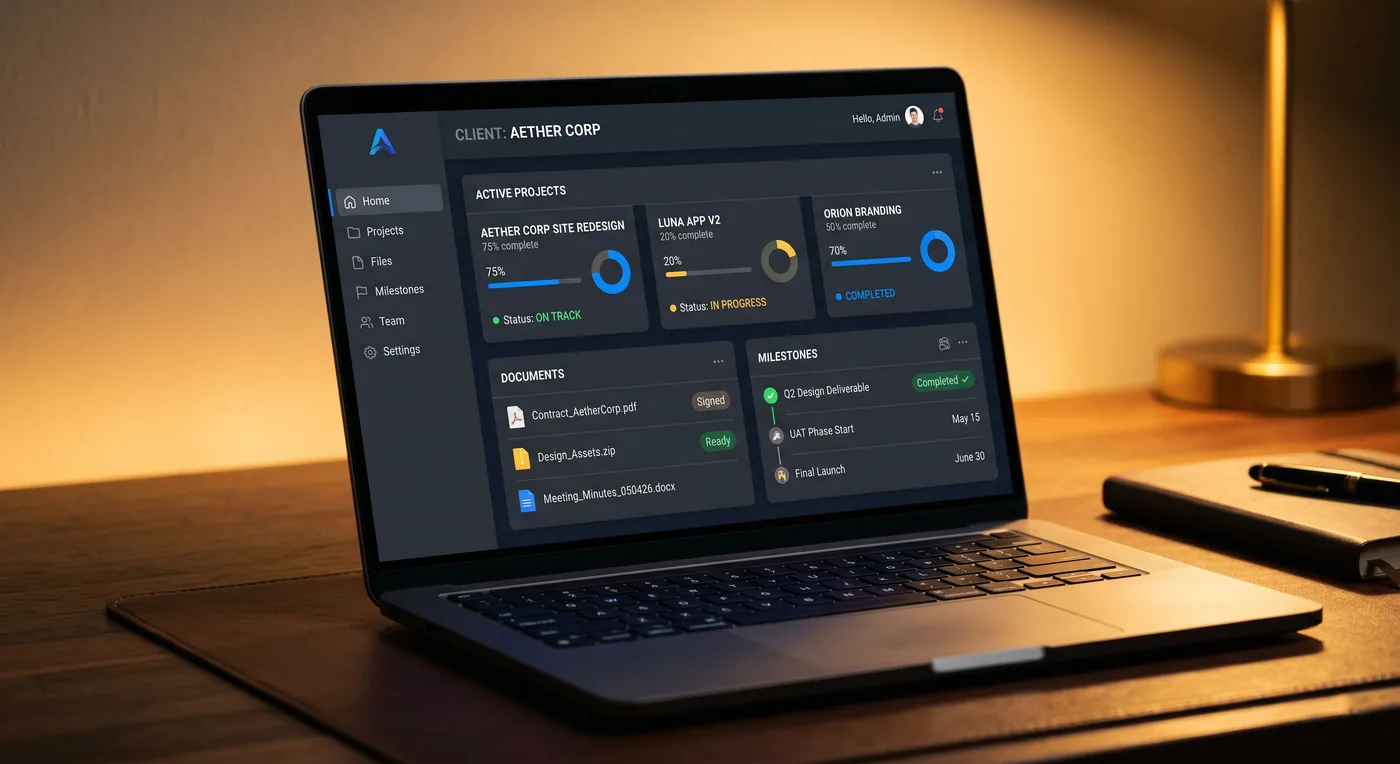
A client portal isn't a fancy tech upgrade. It's a system that removes you from the middle of every small interaction and lets your business run cleaner without you having to be available every time a client has a question.
When most people hear "client portal," they picture something built for enterprise software companies or law firms with hundreds of active matters. But the concept scales all the way down to a solo consultant, therapist, tax preparer, or designer with a dozen active clients.
The value isn't complexity. It's clarity. A portal gives clients one place to go instead of sending you an email every time they need something. Here's what that actually changes in practice.
The most common email a service provider gets from an active client is some version of: "Just checking in, any update on where things stand?" This happens because clients don't have visibility into the process. They're not being difficult. They just don't know.
A portal with a visible project status, milestone tracker, or progress bar eliminates that email entirely. The client can check at any time without needing to interrupt you. You stop spending 10 minutes drafting status updates for every client, every week.
Where do your client documents live right now? If the answer is "a mix of email attachments, a shared Google Drive folder, and maybe a Dropbox link I sent six months ago," you already know the problem. Finding things takes time. Clients send you the wrong version. You end up with three copies of the same file and no clear record of what's current.
A portal with a document section creates a single source of truth for every file related to an engagement. Client uploads go there. Your deliverables go there. Nothing lives in an inbox.
A well-built client portal signals to your client that you run a tight operation. Not because it's impressive technology, but because it communicates that you've thought through the client experience intentionally. Most solo providers haven't.
When a client logs into a branded portal with their name, their project, their documents, and a clear view of what's happening, that's a premium experience. It reinforces that they made a good decision hiring you. It sets the tone for the whole engagement.
If a client needs to reschedule, ask a common question, access a past deliverable, or submit additional information, every one of those things probably goes through you right now. Your inbox is the entry point for requests that have nothing to do with the actual work you do.
A portal handles these interactions without you. Clients find what they need, submit what you asked for, and book time when it's available. You see a notification. You don't have to be the one who responds to every small thing.
The businesses that benefit most from a portal aren't the ones with the most clients. They're the ones where the provider is constantly context-switching between doing the work and managing communication about the work. If that's you, the problem isn't capacity. It's infrastructure.
A portal doesn't need to be elaborate to work. It needs to be consistent, branded, and actually used. Built well, it becomes invisible infrastructure — something clients appreciate without thinking about it, and something you stop thinking about entirely because it just runs.
If you're managing active client relationships through email alone, that's worth examining. The question isn't whether a portal would help. It's how much the current setup is costing you that you haven't added up yet.
Ready to stop managing clients through your inbox?
Take the free 3-minute Digital Readiness Assessment and see exactly what infrastructure your business is missing.
Take the free assessment → Or book a call